

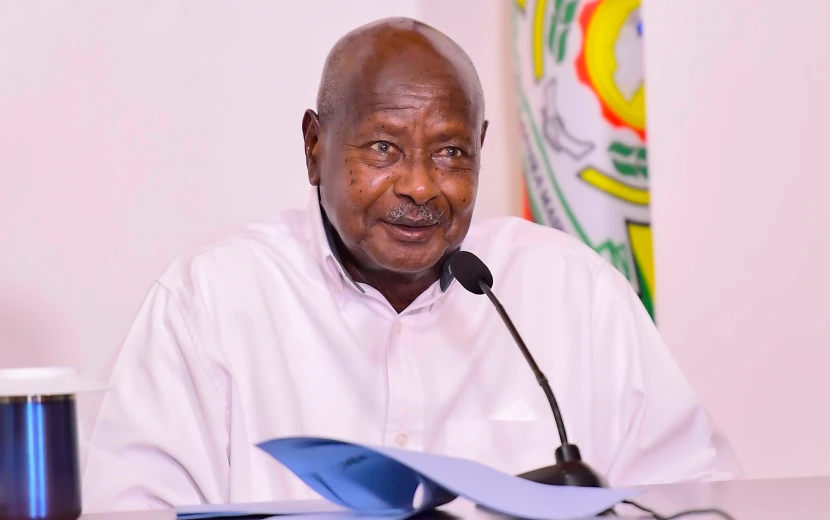
The Museveni I Know
By Abel Mwenda
The Museveni I Know is a reflective political narrative that traces the making of one of Africa’s most consequential and debated leaders, Yoweri Museveni. Blending history, satire, cultural wisdom, and personal observation, the novel follows a narrator who witnesses the rise of a quiet yet calculating revolutionary during one of Uganda’s most turbulent political eras.
Set against the uncertain aftermath of the fall of Idi Amin, the story begins in a nation struggling to rediscover itself. In university corridors, crowded bars, political gatherings, and whispered conversations across Kampala, the name “Museveni” begins to emerge — first as rumor, then as possibility, and eventually as a force capable of reshaping the country’s future.
Through the narrator’s eyes, readers encounter a disciplined young intellectual from Ankole whose seriousness, patience, and strategic thinking distinguish him from the many ambitious figures promising salvation for Uganda. While others romanticize revolution as heroic spectacle, Museveni approaches politics with unusual precision, studying power like an engineer examining a damaged machine.
The narrative moves through lecture halls, revolutionary meetings, underground networks, and moments of political uncertainty that reveal the intellectual and ideological formation of the future leader. At the University of Dar es Salaam, a center of postcolonial debate and African revolutionary thought, Museveni absorbs the ideas of liberation politics and African socialism shaped by the influence of Julius Nyerere.
As Uganda continues to experience coups, military rule, and failed political promises under leaders such as Milton Obote, Museveni’s ideas gradually transform into organized action. The story traces the evolution of revolutionary networks, ideological debates, and political calculations that slowly shape a determined movement capable of altering Uganda’s destiny.
Told with humor, irony, and the wisdom of African proverbs, The Museveni I Know is not merely the story of one leader. It is also the story of teachers, students, farmers, soldiers, market women, and ordinary citizens navigating the uncertainty of a nation trying to rebuild itself after years of instability.
Through vivid storytelling and historical reflection, the novel explores the fragile line between idealism and authority, reminding readers that history is rarely written by heroes or villains alone, but by complex human beings shaped by extraordinary circumstances.
“Because in Africa, history is not only written in books. It is told in stories.”